
For B2B SaaS companies, risk management isn’t just a regulatory checkbox—it’s a crucial part of maintaining business continuity, safeguarding customer data, and ensuring long-term growth. As these companies grow, they often face increased pressure to meet complex security and compliance standards while also managing operational risks. The Truzta Risk Management Module provides a comprehensive solution that simplifies risk identification, assessment, and mitigation, making it an indispensable tool for businesses operating in this space.
The Importance of Risk Management in B2B SaaS
B2B SaaS companies handle a vast array of client data, often across different sectors and regions. This makes them prime targets for security breaches, regulatory scrutiny, and operational risks. Without a robust risk management strategy in place, these companies can quickly find themselves exposed to threats that could disrupt service delivery, damage client relationships, and lead to financial losses.
An effective risk management system does more than identify potential threats—it quantifies risks, prioritizes them based on impact, and ensures that mitigation strategies are in place. This is where Truzta steps in with its innovative Risk Management Module, designed to streamline and automate much of this process.
Key Features of the Truzta Risk Management Module
1. Predefined List of Potential Risks
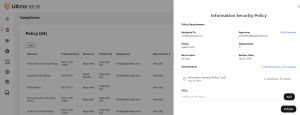
Truzta provides a comprehensive, predefined list of common risks tailored to the needs of B2B SaaS organizations. This eliminates the need for companies to manually brainstorm potential risks, offering a head start in the risk identification process. These risks cover areas such as data breaches, compliance failures, and system downtimes, ensuring no critical areas are overlooked.
2. Automated Risk Scoring
Once risks are identified, the module assigns an inherent risk score, reflecting the level of risk before any mitigation strategies are applied. After defining and implementing mitigation measures, the system automatically calculates a residual risk score, providing a clear picture of the remaining risk. This automated scoring helps companies prioritize their responses based on the severity of each risk, ensuring that critical issues are addressed first.
3. Departmental Risk Assignment
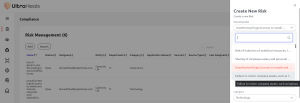
To ensure accountability, the Truzta Risk Management Module allows companies to assign risks to specific departments and Single Points of Contact (SPOC). By designating responsibility, B2B SaaS companies can ensure that the right teams are managing and mitigating risks relevant to their expertise. This targeted approach helps distribute the workload more effectively and ensures that each department focuses on the risks most relevant to their operations.
4. Bulk Import and Manual Add Options
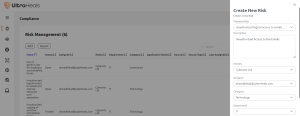
The module supports both bulk import and manual addition of risks, providing flexibility for how companies want to handle their risk management processes. Bulk import is especially useful for companies that need to migrate existing risk databases into the Truzta system, while manual entry allows for more granular control over adding new or emerging risks as they arise.
Why Truzta Risk Management Is a Must for B2B SaaS Companies
For B2B SaaS companies, risk management is often a time-consuming and complex process. From identifying potential threats to assigning responsibility and ensuring proper mitigation, the demands can quickly overwhelm internal teams. The Truzta Risk Management Module addresses these pain points by providing an intuitive, automated system that streamlines every aspect of risk management.
Conclusion
The Truzta Risk Management Module is a critical tool for B2B SaaS companies looking to streamline their risk management processes. With features such as predefined risks, automated scoring, and department-specific assignments, it enables businesses to take a proactive approach to risk management. By automating key processes and assigning accountability, Truzta helps SaaS companies ensure that they remain compliant, secure, and prepared for the future allowing them to focus on what they do best: delivering value to their clients.





